
DECO SOUTHWEST
RENOVATION AND SITE DESIGN, LOS ANGELES
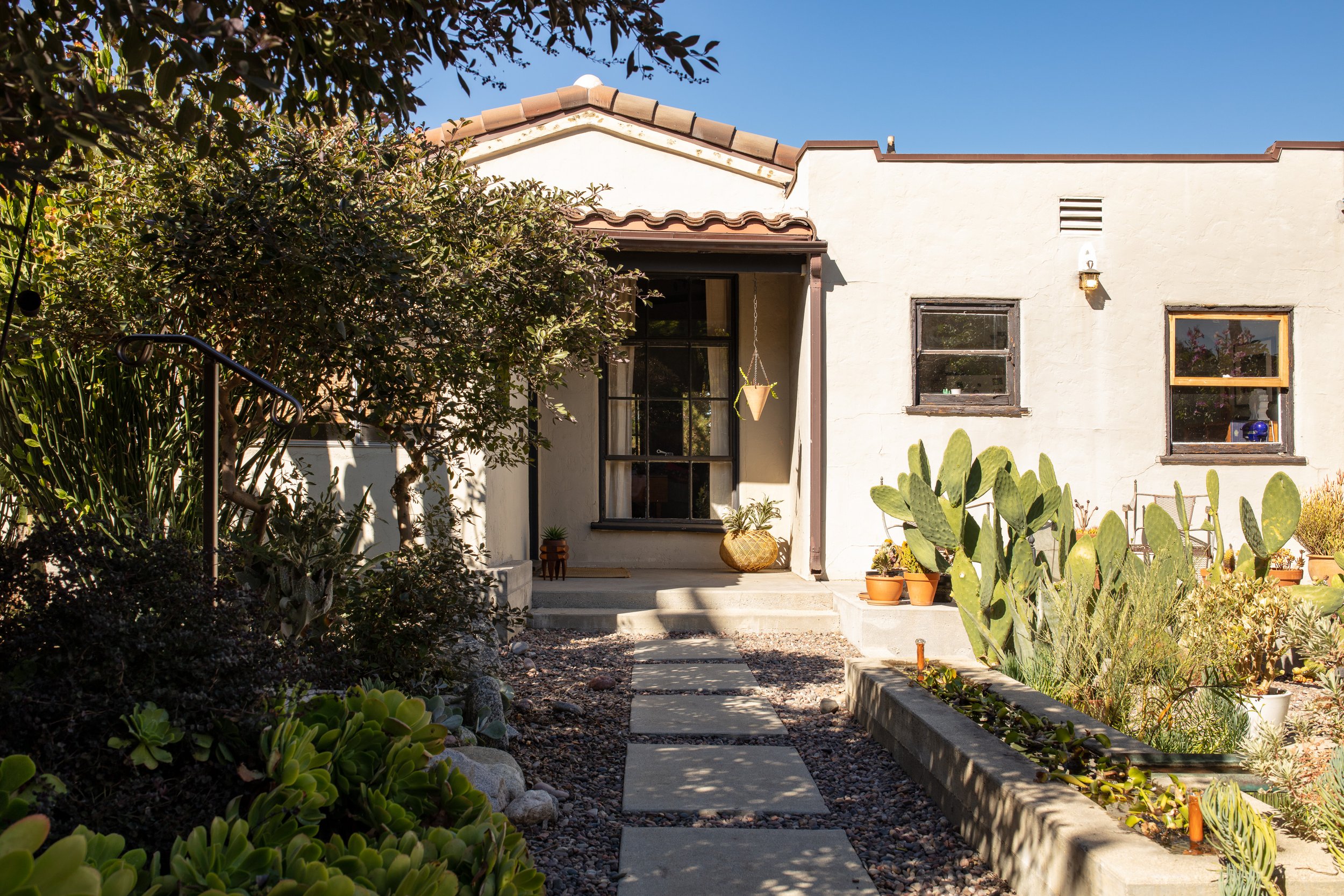
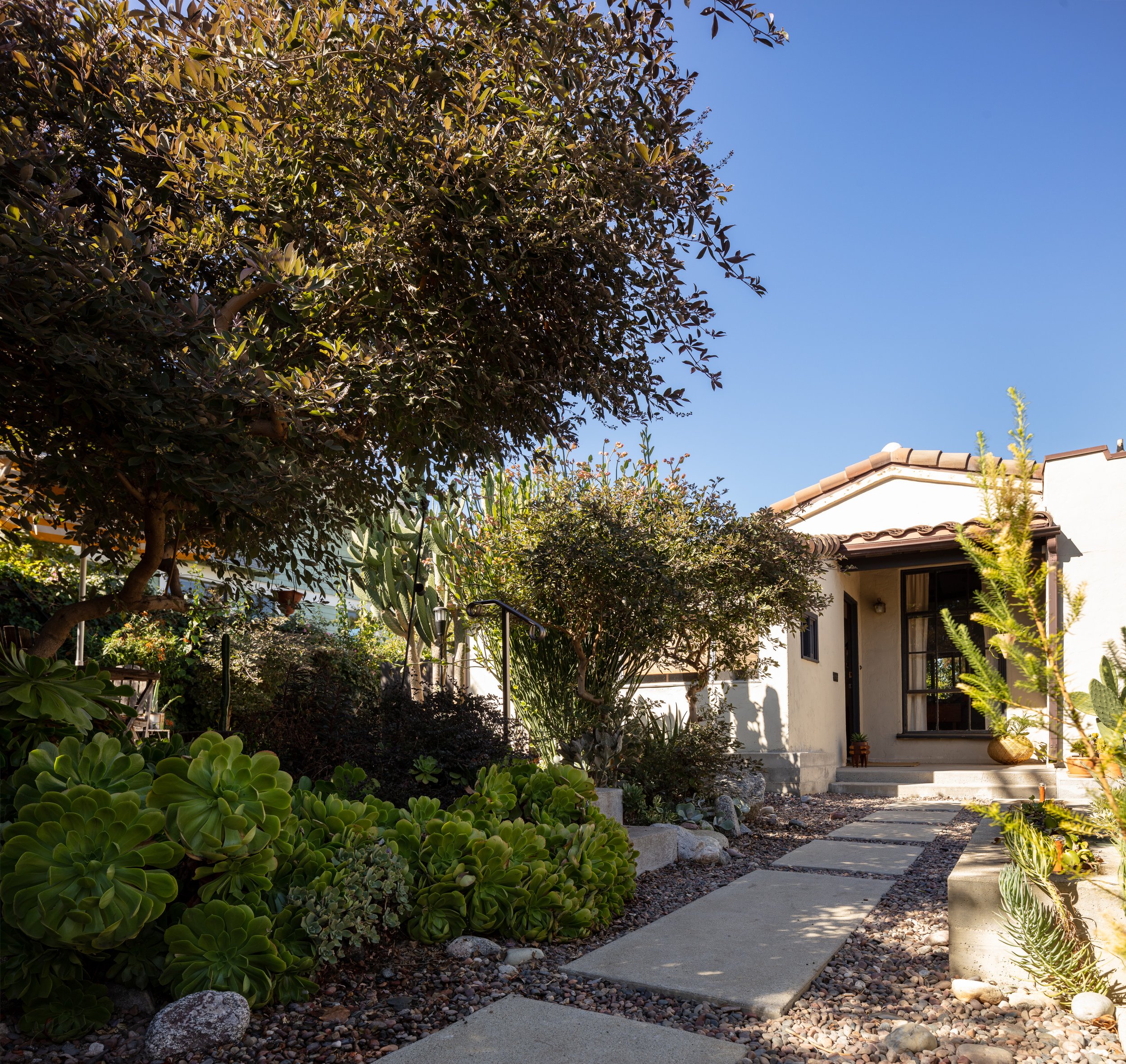
This project involves the renovation and landscape design of a 1937 duplex. Sited on a steep, tight and unusually shaped street to street lot, the building is a study in spatial adaptation—its form shaped as much by constraint as by style. The result is a structure that blends Spanish Revival elements, 1930s Deco accents, and a modern sensibility emerging from the building’s irregular geometry.
The duplex is entered from two different streets, with each unit having its own distinct address and orientation. On one side, the building appears as a modest one-story volume; from the opposite side, it reads as a massive three story building with an imposing porch crowning the structure and entered from the other side. Internally, conventional rectilinear spaces transition into trapezoidal and triangular rooms at the rear, where the structure deforms to the angle of the street below.
Rather than impose a singular style, the multi-phase renovation embraces the home's stylistic ambiguity. The approach is not restoration in a strict sense, but a contemporary interpretation using a vocabulary of historic details to add to its layered narrative. “Was this built recently by a very fluent contemporary designer or by a past eccentric with a vision of the future?”
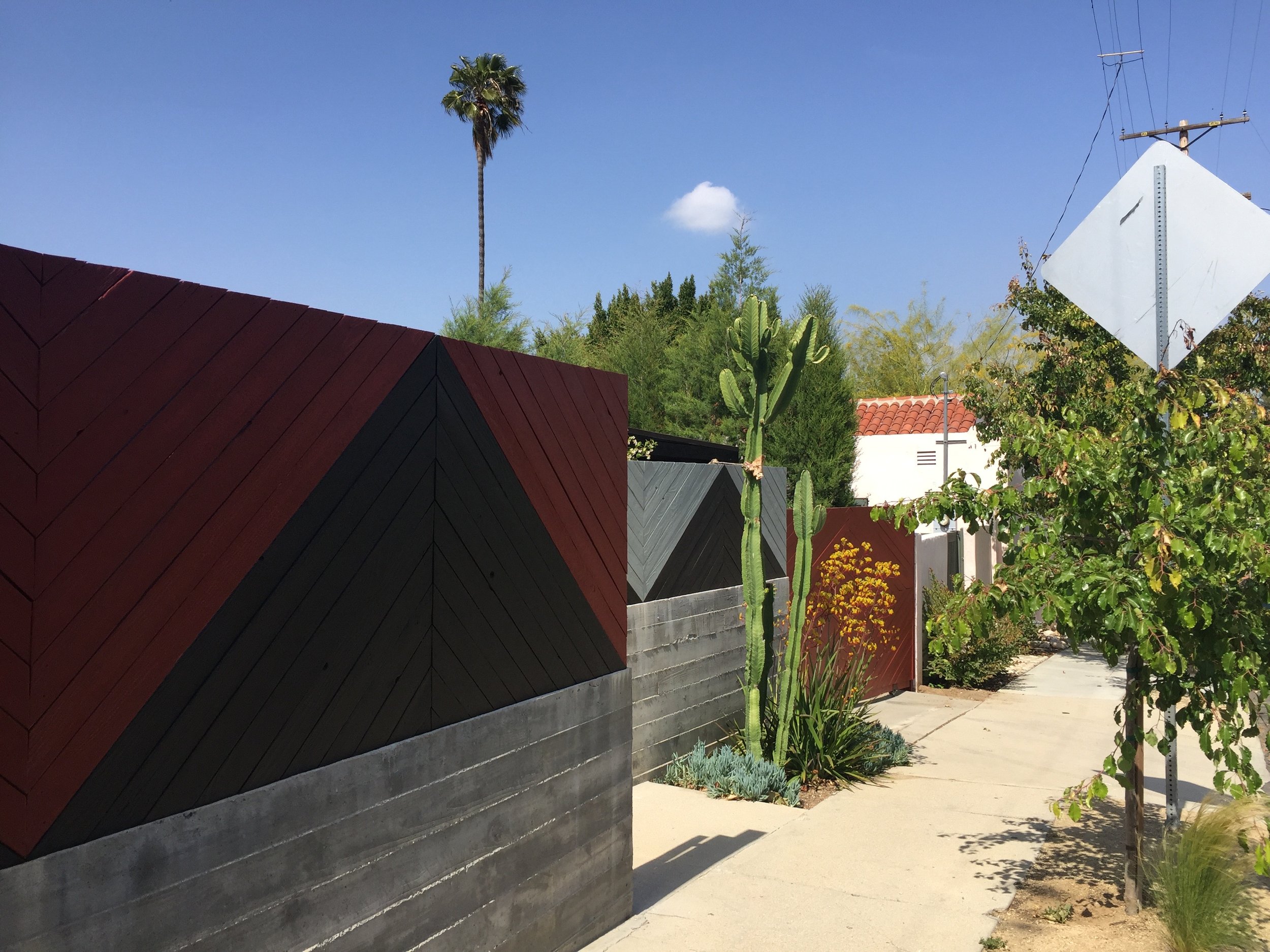
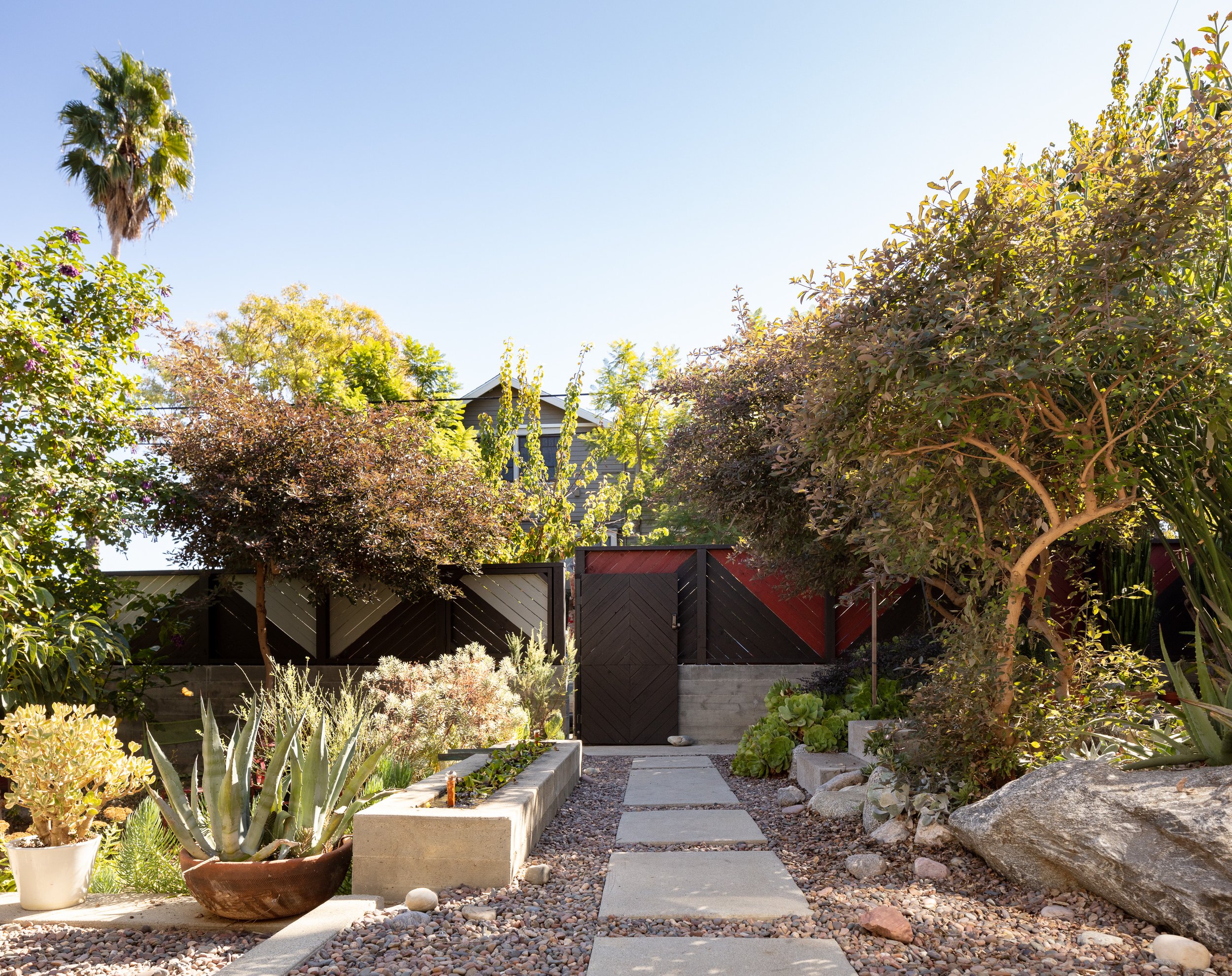
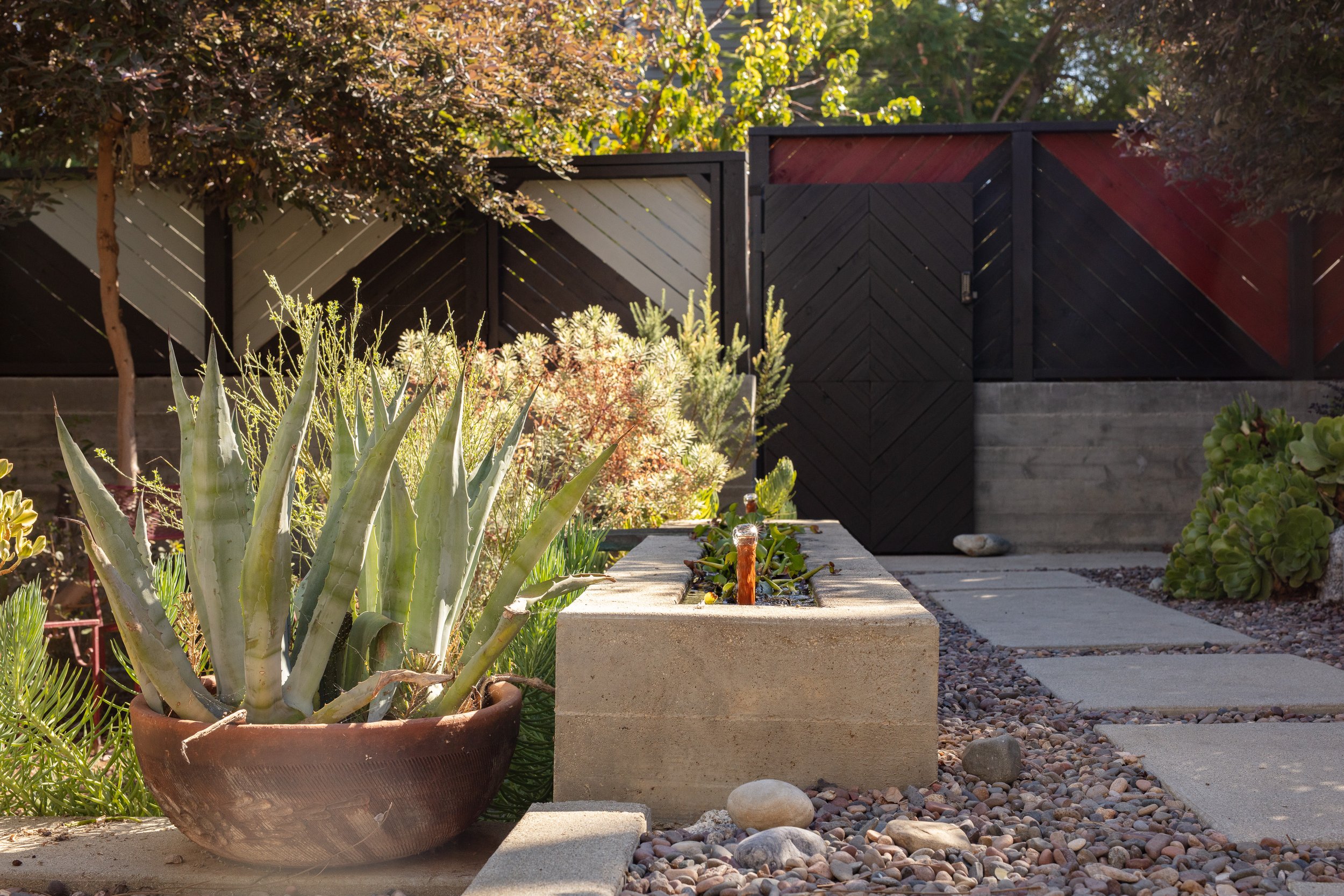
Out front, the fence made of board-formed concrete and wood is a boundary and a statement. It zigzags to form an entry vestibule with a planter along the sidewalk. An operable window embedded in the fence allows for variable and controlled reciprocity between the garden and the street.
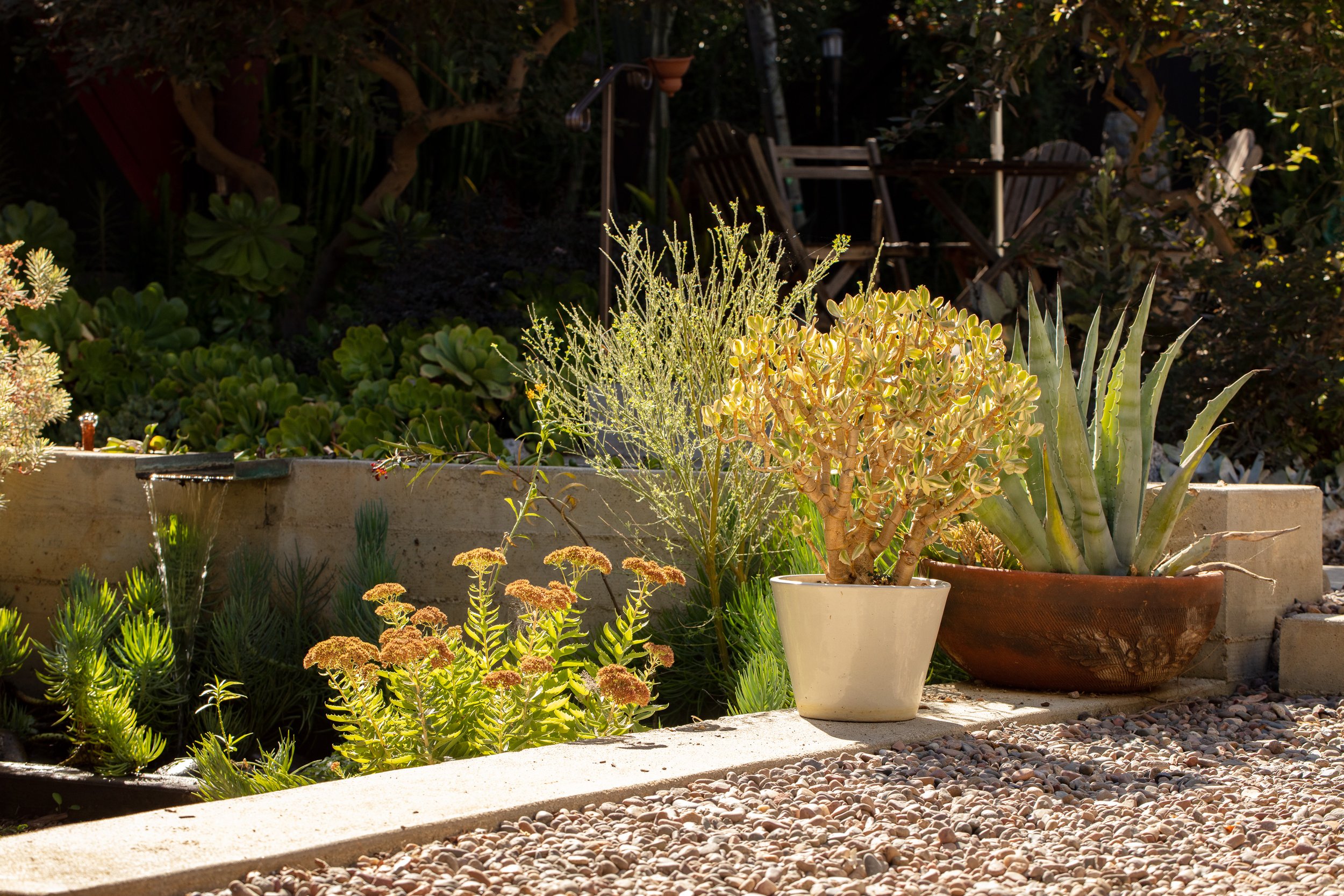
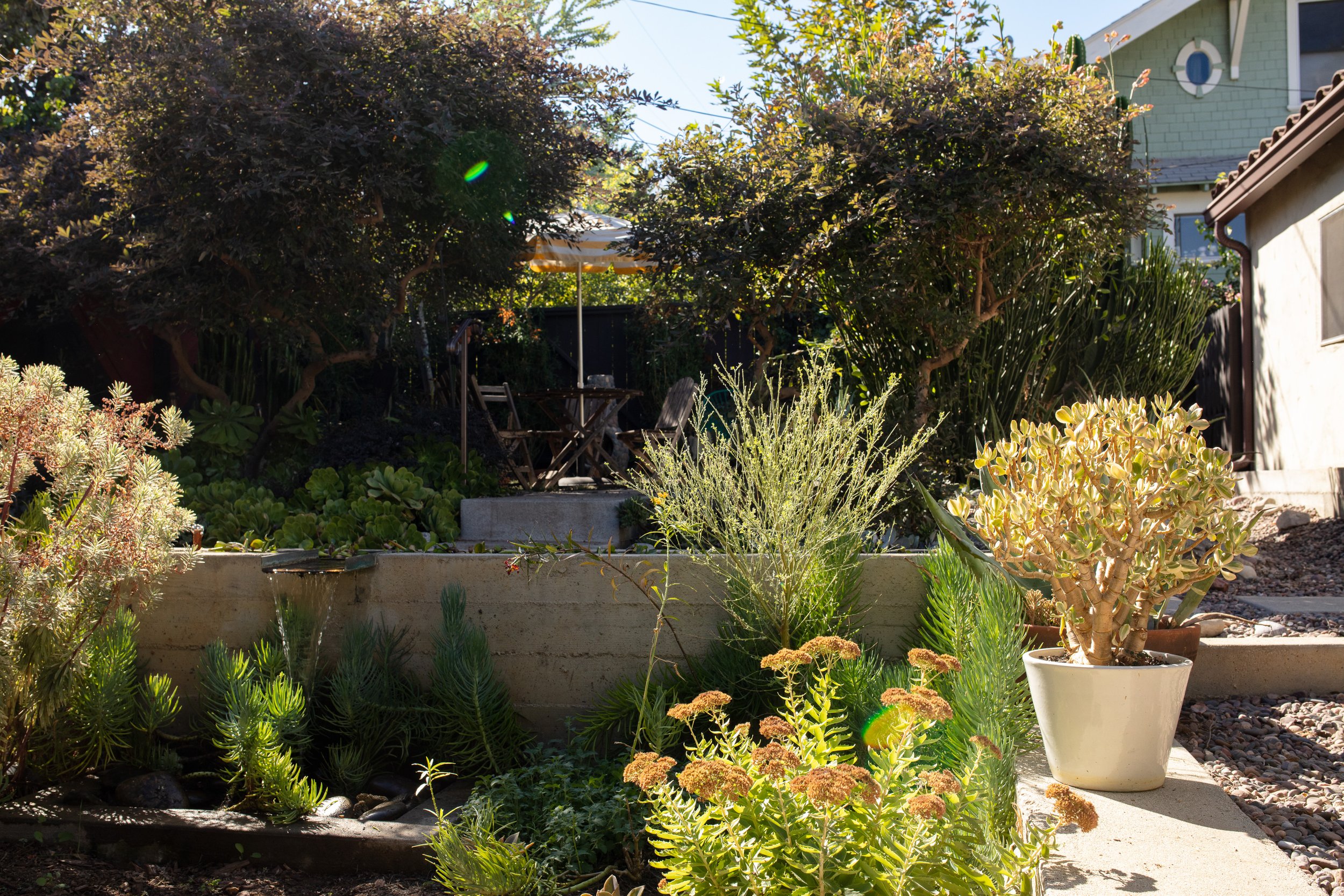
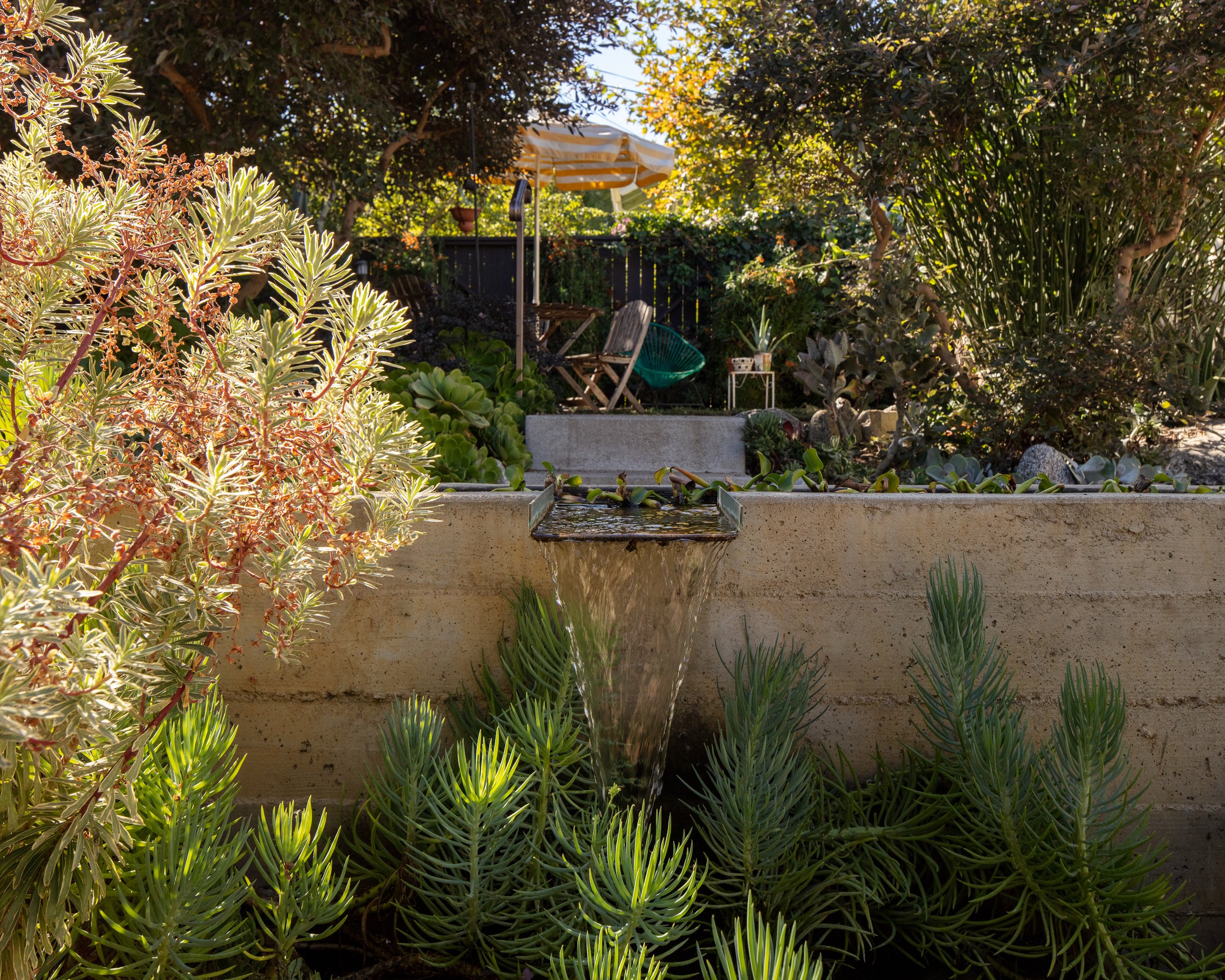
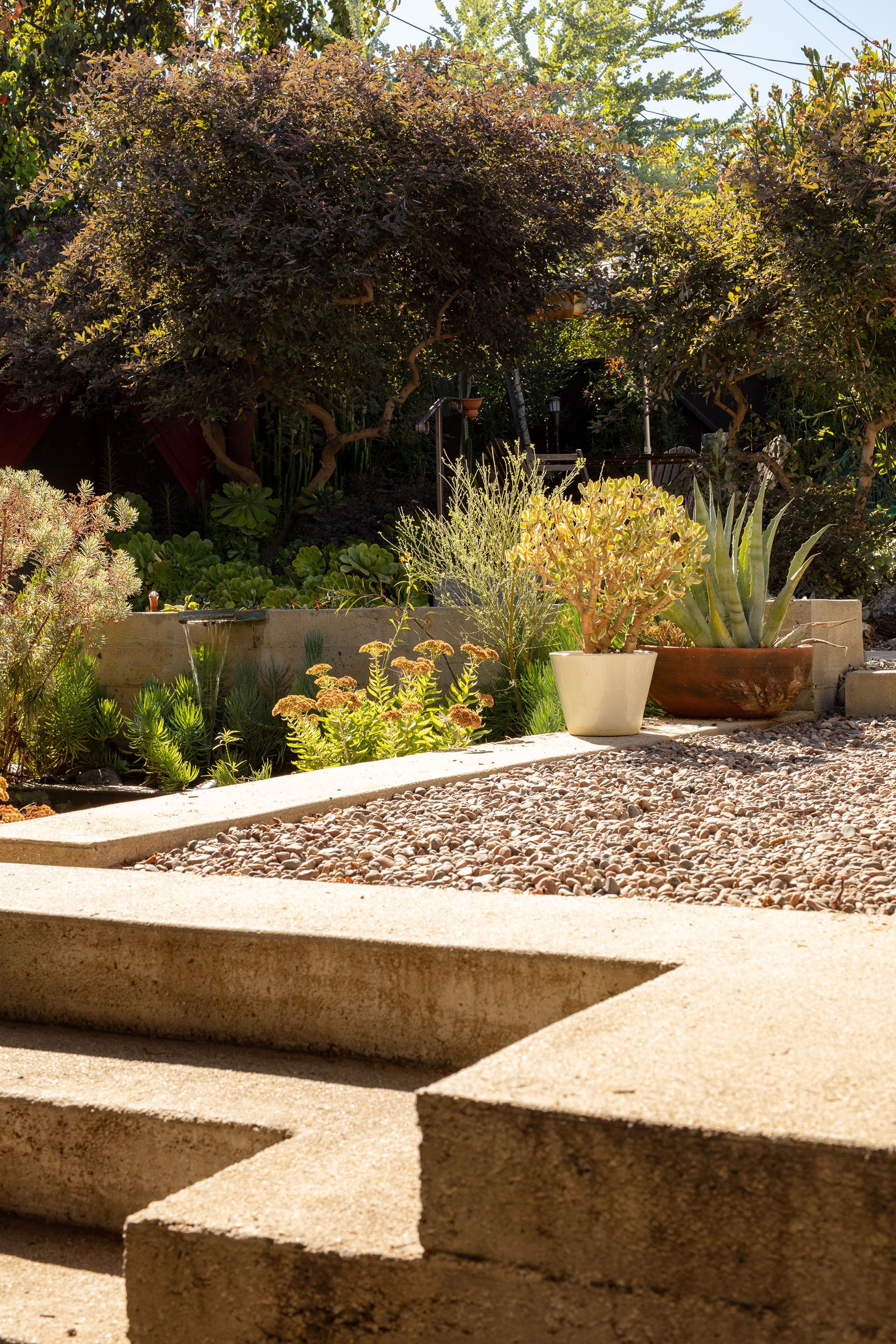
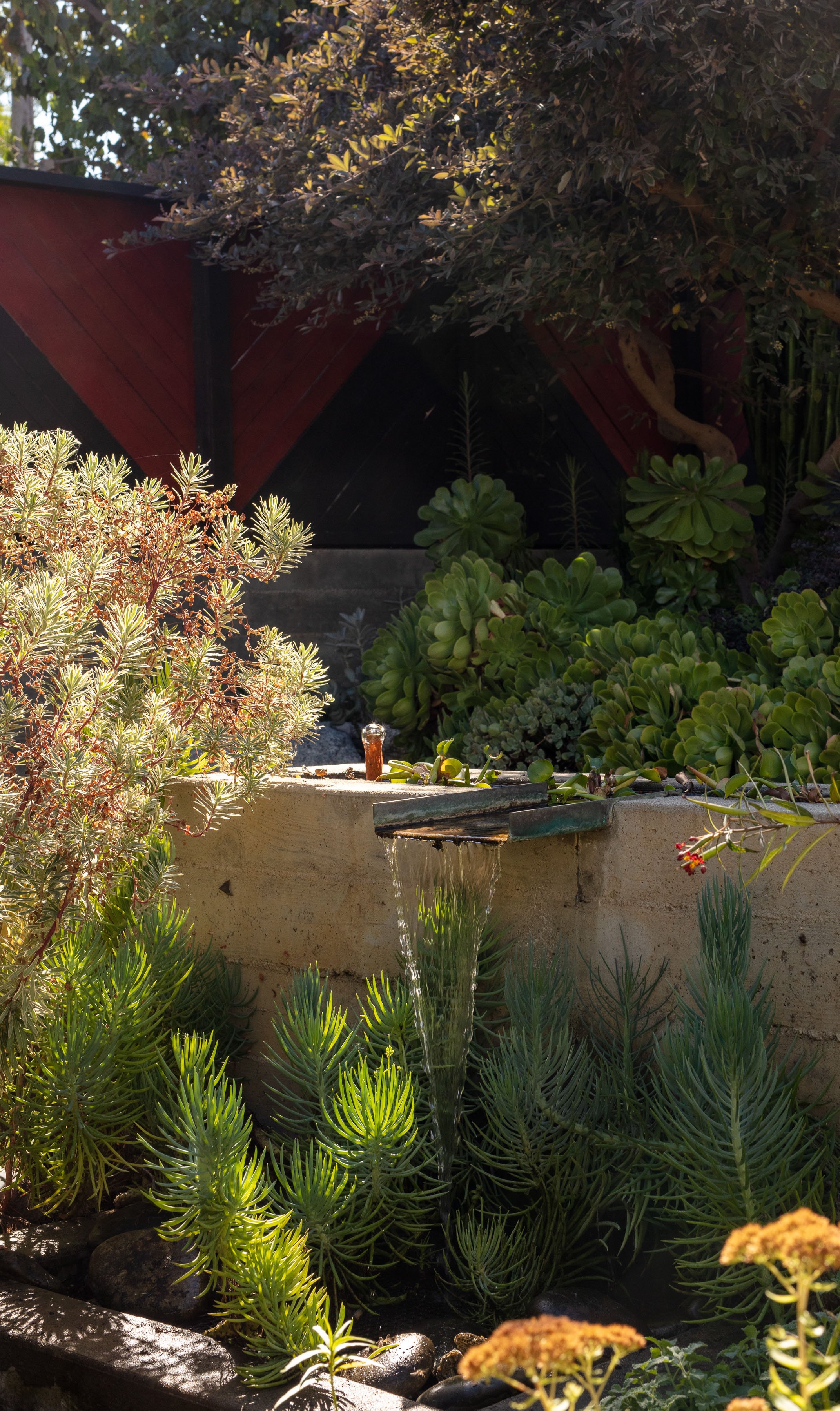
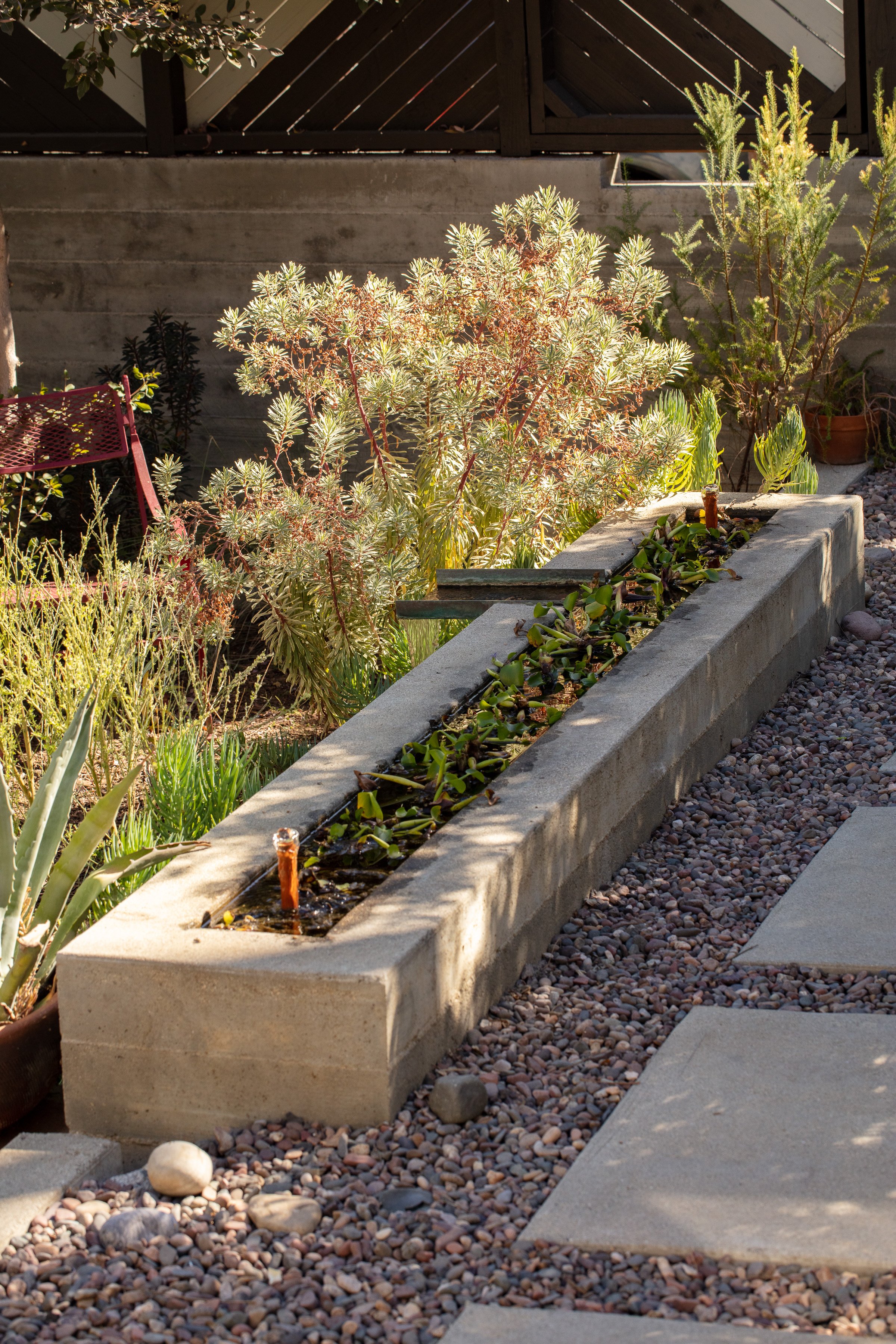
The front yard was regraded to resolve drainage issues. New landscape elements—including board-formed concrete stairs, retaining edges, and a fountain—define the garden levels and entry sequence. At the upper level, triangular pavers form an irregularly shaped but cohesive outdoor surface that responds to the geometry of the site.
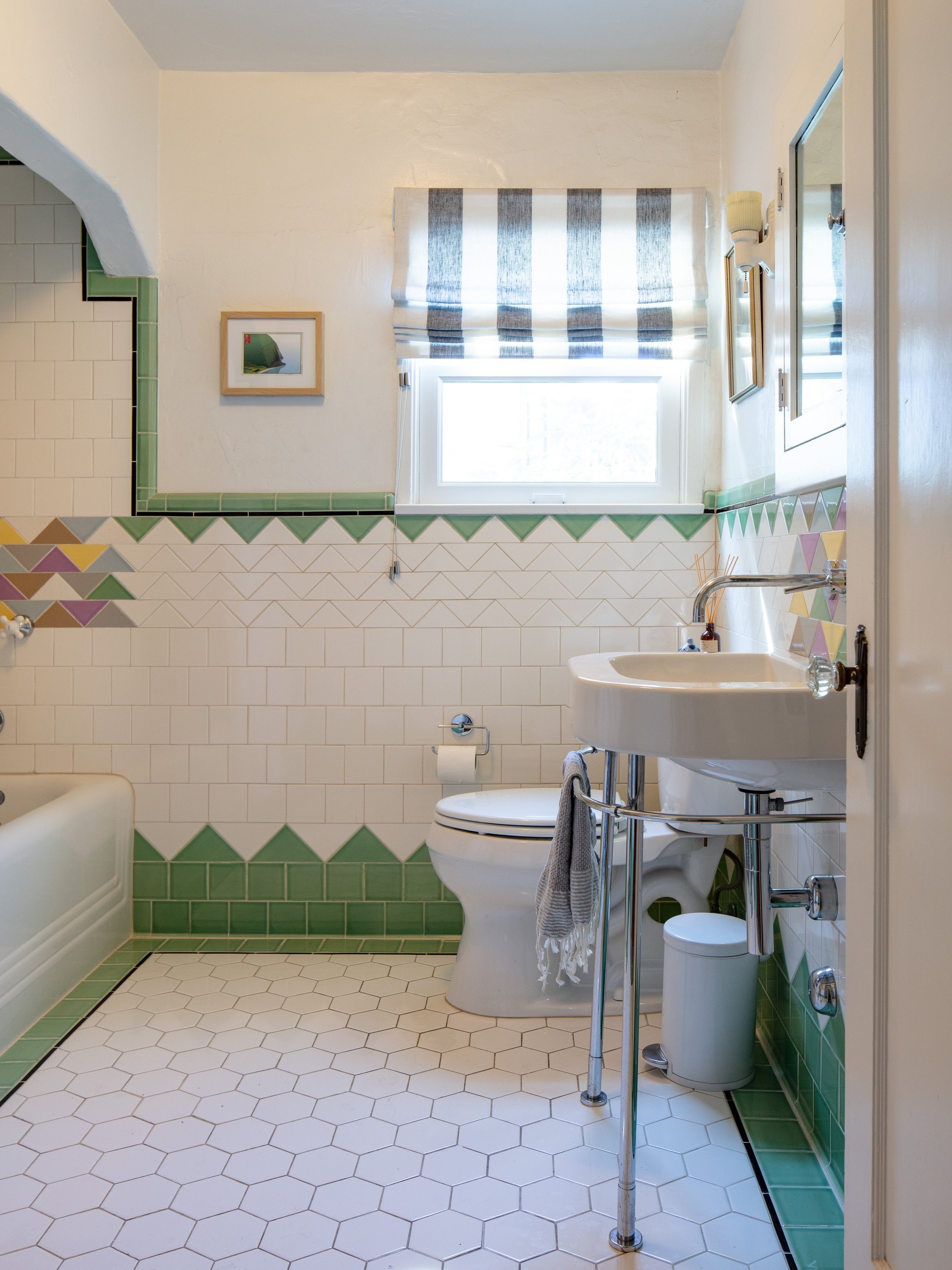
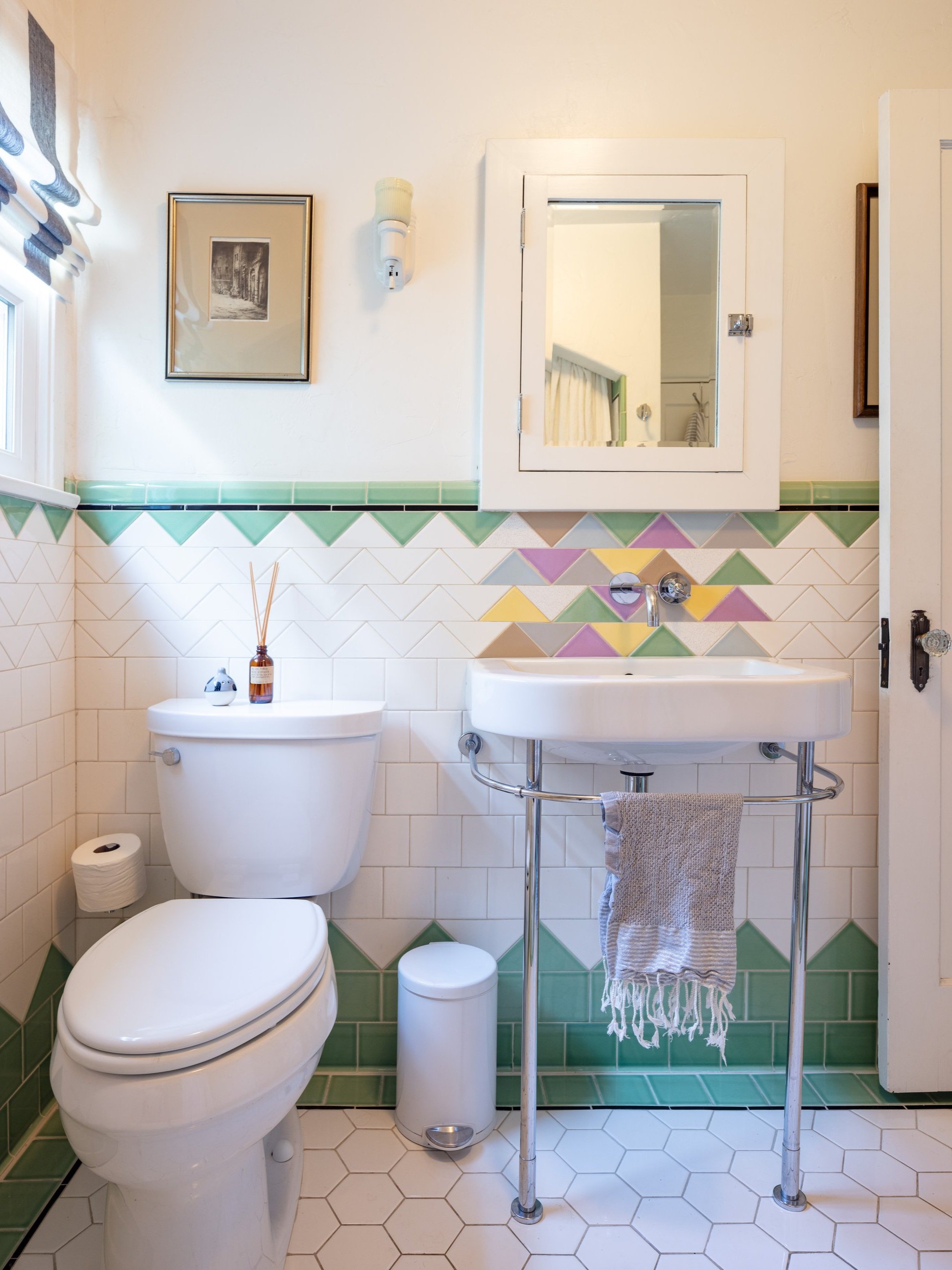
Interior renovations, such as the bathroom, reference traditional materials and pattern-making. The bathroom employs traditional deco tiles and motifs, however the composition of white and multicolored triangular tile marks a deliberate shift from period authenticity to modern reinterpretation.
This project embraces complexity—formal, historical, and spatial—using it as a framework for a layered and responsive design.